
Lash Lift Aftercare Instructions Your Clients Will Actually Follow
Simple, but strict. That's the golden rule for professional lash lift aftercare. The first 24-48 hours are everything—lashes must stay completely dry and free of any makeup or oil-based products. This is the crucial window where the perming solution fully sets, locking in the beautiful lift and curl you just created for your client. As a licensed professional, it is your responsibility to ensure your client understands that lash lifts should never be attempted at home.
Setting the Gold Standard for Client Aftercare
As a licensed beauty professional, your reputation is built on delivering flawless results that last. The service itself is only half the job; the other half is arming your clients with killer aftercare instructions. This isn't just about handing them a pamphlet of rules. It’s about explaining the why behind each guideline, turning aftercare from a chore into a key part of the luxury experience they just paid for at a professional salon.
This guide goes way beyond generic advice to help you establish a new standard of client care. When you get this right, you're not just protecting your beautiful work. You're building solid client loyalty and cementing your status as the expert they trust. It all starts the moment your service ends, with a clear, confident conversation about why they must always see a licensed professional for any lash lift, brow lamination, or tinting service.
The Science Behind the First 48 Hours
That initial 48-hour window is non-negotiable, and it’s your job as a professional to explain why. During a lash lift, disulfide bonds within the natural lashes are broken down and then reformed into a new, curled shape. This is a delicate chemical process that requires professional training and should never be done at home. The process needs time to neutralize and fully harden.
Think of it like a professional hair perm—if a client gets it wet or messes with it too soon, the style will drop or get misshaped. The same thing happens with lashes. Exposing them to moisture or pressure too early can disrupt those newly formed bonds, causing the curl to relax or even bend incorrectly.
Here are the key points to drive home before your client walks out the door:
- No Water or Steam: This means no showers (a bath is better!), swimming, saunas, or even intense workouts that cause sweating. Moisture is the enemy of a fresh lift because it weakens the bonds.
- Avoid All Makeup: Mascara and other eye makeup can interfere with the setting process. More importantly, removing it requires cleansers and rubbing, both of which are forbidden during this time.
- Sleep on Your Back: This is crucial. If a client sleeps on their side or stomach, they can physically crush or kink their lashes while they're still malleable. This can lead to permanently crisscrossed or bent lashes that are a nightmare to correct.
The Critical First 48 Hours: Do's and Don'ts
To make things crystal clear for your clients, a simple summary can work wonders. This cheat sheet breaks down the most important rules for those first two days post-treatment.
| Action to Take (Do) | Activity to Avoid (Don't) | Why It Matters (The Science) |
|---|---|---|
| Sleep on your back. | Get lashes wet or steamy. | Moisture weakens the newly formed disulfide bonds, causing the curl to drop. |
| Be gentle with your eye area. | Rub or touch your eyes. | Physical pressure can bend or misshape the lashes while they are still setting. |
| Plan for a makeup-free 48 hours. | Apply mascara or other eye makeup. | Makeup and its removal process can disrupt the curl and introduce oils. |
| Use a satin or silk pillowcase. | Sleep on your stomach or side. | Crushing lashes against a pillow can cause permanent kinks and weird bends. |
Giving clients a quick reference like this empowers them to protect their investment and, by extension, your hard work as a licensed esthetician or cosmetologist.
From Rules to Rituals: The Art of Client Communication
You'll achieve better compliance if you frame aftercare as a partnership. You've performed the expert service; now, they are the guardians of the results. This team approach makes clients feel more invested in the outcome. Instead of just listing what not to do, focus on the amazing results they'll maintain by following the rules.
The most successful licensed professionals don't just give instructions; they educate. When a client understands that proper aftercare directly translates to longer-lasting, more beautiful lashes, they become a partner in maintaining your work.
In the booming lash lift industry, valued at $1.2 billion globally in 2024, this education is more than just good service—it's smart business. Proper aftercare is the unsung hero that can extend a lift's longevity by up to 40%. Top salons report that clients who follow aftercare see their lifts last a full 8-12 weeks, compared to just 4-6 weeks for those who don't. This isn't just about happier clients; it's about protecting your bottom line from premature rebooking and solidifying your reputation. You can learn more about the latest lash lift market insights on marketintelo.com.
Alright, the first 48 hours are officially over. Now the real work of making that gorgeous lift last begins. This is where your client's routine shifts from "don't touch!" to active maintenance, and honestly, this is where you cement your status as their go-to lash expert.
Breaking down the next eight weeks for them isn't just about giving rules; it's about empowering them with a game plan. When you frame it this way, you're not just selling a service—you're providing a whole wellness routine for their lashes. This is also the perfect, most natural time to talk about the professional aftercare products you retail.
This approach helps clients know what to expect as their lashes naturally change, see why nourishing them is so important, and watch their lift live its best life from start to finish.
This visual is a great starting point, driving home just how critical those initial hands-off hours are for a lift that lasts.
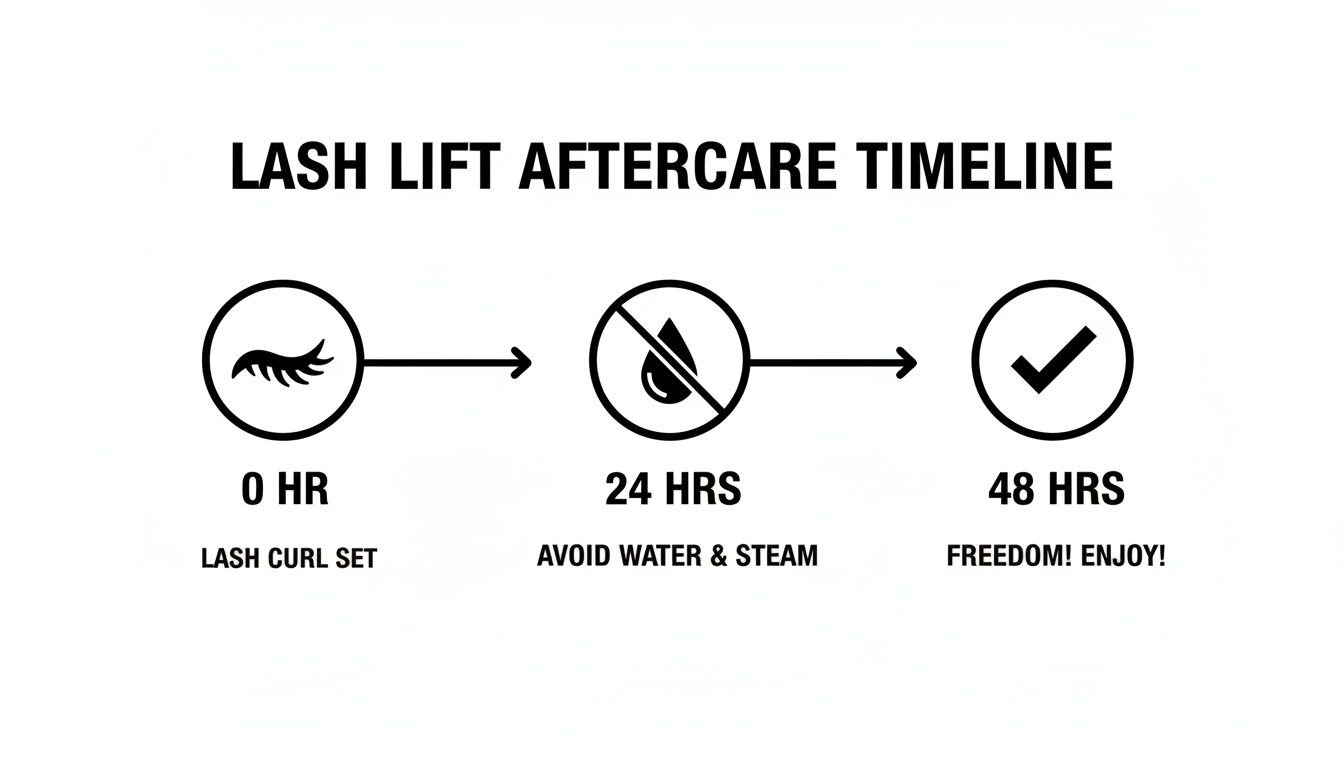
The journey to a long-lasting lift truly starts by following these strict "hands-off" rules for the first 24 to 48 hours.
Weeks 1-2: The Gentle Grooming Phase
Once the chemical bonds have fully cured, the first two weeks are all about protecting the shape and structure of the lift. Your job is to teach clients the simple, gentle habits that keep their lashes perfectly fanned out and prevent any annoying tangles.
It all starts with the daily spoolie ritual. Make sure they know to gently brush through their lashes every morning and after cleansing their face. This one little step is huge for realigning any hairs that got a bit unruly during sleep, keeping that uniform curl you worked so hard on. Remind them: gentle is the key word. Aggressive brushing can actually weaken the natural lash.
Cleansing is the other big piece of the puzzle. They can wash their face like normal now, but they absolutely must use an oil-free cleanser around their eyes. You have to explain that oils are the arch-nemesis of a lash lift. They slowly break down the lifting solution, causing that beautiful curl to droop way too soon.
Weeks 3-4: The Nourishment Phase
As clients hit the midpoint of their lash lift, the focus pivots from just maintaining to actively nourishing. Their lashes have been through a chemical process, just like color-treated hair from a licensed cosmetologist. They need some love! This is the perfect time to introduce them to the magic of a professional-grade lash serum.
Explain how a high-quality conditioning serum, like the ones from Beauty Endevr, works to replenish the nutrients and moisture that the process can strip away. It keeps lashes hydrated and flexible, preventing them from getting brittle and breaking. This isn't just about making the lift last longer; it's about promoting the health of the natural lashes underneath.
By framing aftercare as a lash health routine instead of a list of restrictions, you totally elevate their experience. When lashes are nourished, they stay strong and flexible. This makes the grow-out phase look seamless and sets them up for an even better result at their next appointment.
Advise them to apply the serum once a day, usually at night after they've cleansed their face. A tiny bit applied right at the lash line is all it takes. Consistent use during these weeks makes a world of difference in how soft and resilient their lashes feel.
Weeks 5-8: The Graceful Grow-Out Phase
Now we're in the final stretch. Your main role here is managing expectations as their natural lash cycle does its thing. New, straight lashes will start popping up among the lifted ones. This is totally normal, and if you prepare them for it, they won't panic and think their lift is "failing."
This is where your professional guidance really shines. Explain that as their lashes naturally shed and new ones grow in, the overall look will soften. For clients who love the science behind it, you can point them to resources that explain the lash growth cycle in more detail. Daily spoolie grooming is more important than ever now—it helps blend the new growth with the lifted lashes, keeping everything looking cohesive.
This is also your cue to get them booked for their next appointment. A lash lift can typically be redone by a professional every 6-8 weeks. By reaching out during this final phase, you make it easy for them to rebook at the perfect time so they can keep their amazing results going without a break.
Teaching Clients What Products to Avoid
It’s one thing to tell a client what to do, but it's just as important—if not more so—to give them a clear list of what not to do. Beyond the obvious "no water for 48 hours" rule, a whole world of hidden culprits can undo your beautiful work. When you explain the why behind these rules, you empower your clients, protect the integrity of their lash lift, and solidify your role as their go-to beauty professional.
Think of it this way: when clients understand how certain ingredients react with the professional-grade solutions you use, aftercare stops feeling like a list of chores and starts feeling like a team effort. This conversation is also the perfect, most natural way to introduce them to the professional, lash-safe retail products you stand behind in your salon.
Oils and Harsh Formulas: The Arch-Enemies of a Good Lift
If there's one ingredient that is the absolute enemy of a professional lash lift, it's oil. Stress this to your clients. Oil-based makeup, serums, cleansers—they all work to break down the chemical bonds that create that perfect curl. When those bonds weaken, the lashes relax and fall flat, sometimes weeks ahead of schedule.
It’s not just the obvious oils like castor or coconut oil. So many products, from creamy cleansers to rich eye creams, contain oils that can easily migrate to the lash line and cause the lift to drop.
A simple rule for your clients: "If it's not specifically labeled 'oil-free' and 'safe for lash lifts/extensions,' it doesn't go anywhere near your eyes." This takes all the guesswork out of it for them.
Beyond oils, a few other common products will sabotage a great lift. Make sure these are on your client's "do not use" list:
- Waterproof Mascara: This is a definite no. The formula is designed to be stubborn, which means removing it requires oil-based removers and a lot of rubbing. That's a deadly combination for a professional lift.
- Mechanical Lash Curlers: There’s simply no need for them! The lift has already done all the hard work. Using a mechanical curler now will only create a strange-looking crimp in the lash and could even cause breakage.
- Harsh Makeup Removers: Removers containing alcohol, glycols, or other strong solvents will strip moisture from the lashes. This makes them brittle, dry, and much more likely to snap.
We've put together a quick-reference table you can share with clients to help them identify what to steer clear of in their daily routines.
Lash Lift Saboteurs: Product and Ingredient Checklist
| Avoid This Product/Ingredient | Why It's Harmful | Safe Alternative |
|---|---|---|
| Oil-Based Cleansers/Makeup | Breaks down the perming solution bonds, causing the curl to drop prematurely. | A gentle, oil-free foaming cleanser specifically designed for lashes. |
| Waterproof Mascara | Requires harsh, oil-based removers and aggressive rubbing, which destroys the lift. | A water-based mascara that rinses off easily, or even better, a lash tint. |
| Mechanical Eyelash Curlers | Can create an unnatural crimp in the lashes and lead to breakage. | The lash lift itself! No extra curling is needed. |
| Heavy Eye Creams or Serums | Can migrate to the lash line, weighing down lashes and weakening the curl. | Apply eye cream carefully with a ring finger, keeping it well away from the lashes. |
| Rubbing or Pulling Eyes | Physically disrupts the curl pattern and can cause lashes to shed prematurely. | Gently pat the eye area dry after cleansing; avoid rubbing with a towel. |
| Sleeping Face-Down | The friction and pressure from a pillow can bend, twist, or flatten the lashes. | Try sleeping on your back or side, or consider using a silk pillowcase. |
This checklist makes it easy for clients to protect their investment and enjoy their gorgeous lashes for the full 6-8 weeks.
The Little Habits That Make a Big Difference
Sometimes, it’s not about products at all—it’s about habits. Educating clients on how simple daily actions can affect their lift is crucial. Sleeping face-down is a huge one. The constant pressure against the pillow can physically bend or flatten the lashes, especially in those first few days when the new shape is still setting.
Likewise, unconsciously rubbing or pulling at the eyes can mess up the curl and even lead to premature shedding. The data on this is pretty clear: poor aftercare is a major issue. Globally, it contributes to a 35% increase in client complaints and issues. In competitive markets, lash artists report that nearly 60% of problems are due to clients using the wrong makeup or rubbing their eyes within the first day, cutting the lift's lifespan from eight weeks down to four or five. You can find more insights into the growing lash services market on introspectivemarketresearch.com.
When you explain these small but significant details, you help clients see the direct connection between their actions and how long their beautiful results last. It turns them into a partner in the process and makes your professional aftercare recommendations, like the Beauty Endevr line, the obvious and trusted solution.
Troubleshooting Common Aftercare Issues
Even when you send clients home with the most detailed aftercare sheet, you're going to get those phone calls. It's just part of the job for any licensed beauty professional. Your ability to calmly and confidently talk them through their concerns is what truly sets you apart. This is your playbook for the most common post-lift panics.
Most problems can be traced back to one of three things: the client didn't quite follow the rules, it's a simple biological thing like their lash cycle, or something went sideways during the application. Your first move is always to listen. Ask specific questions to get to the root of the issue. This isn't just about fixing the problem; it's about building trust and showing you're the expert they can rely on.
Lashes Have Dropped or Straightened Prematurely
This is easily the most frequent call you'll get. A client was thrilled with their sky-high lift, and now, a week or two later, they're looking limp and straight again. Before you blame your products, it's time to do a little detective work.
Start with the first 48 hours. Get specific. "Did you get them wet at all? What about steam from a hot shower or even opening the dishwasher?" More often than not, premature dropping comes down to moisture or oil getting to the lashes before the new bonds had a chance to fully cure.
If they swear they were perfect, the next culprit is their natural lash cycle. If a client happens to be in a heavy shedding phase, those beautifully lifted lashes will fall out, making way for new, straight baby lashes. You can't fight biology, but you can educate them on it. It manages their expectations for next time and reinforces that this is a normal process.
Kinked, Crisscrossed, or Over-Processed Lashes
When a client calls saying their lashes look frizzy, bent, or are crossing over each other, it's usually one of two things: they've physically damaged them after the treatment, or there was an issue with the application. Figuring out which one is key.
Ask them how they sleep. Are they a side or stomach sleeper? Waking up with lashes pressed into a weird shape is a classic sign of post-treatment damage while they were still setting. On the other hand, if the kinking looks uniform across the lash line, you might need to look back at the service itself. Maybe the processing time was a touch too long for their fine lashes, or the shield placement wasn't quite perfect.
An over-processed lash looks and feels frazzled, almost brittle. A lash kinked from sleeping often has a very specific, sharp bend in one spot. Your professional eye as a licensed esthetician or cosmetologist is the best tool for telling the difference.
Be honest. If you think it was an application error, owning it and offering a fix builds way more loyalty than trying to make excuses.
How to Perform a Corrective Service
For lashes that are over-curled, kinked, or crisscrossed, you can perform what's called a relaxing treatment. Think of it as a reverse lash lift. You'll carefully re-apply the lifting solution for a very short amount of time—sometimes just a minute or two is enough—while gently brushing the lashes straight. This carefully breaks down the bonds just enough to release that unwanted bend.
After relaxing the lashes, a deep conditioning treatment is non-negotiable. You need to replenish the moisture and strength. A quality keratin or peptide-infused mask is perfect for this. Recommending a great retail product, like the Beauty Endevr aftercare serums, not only helps fix the immediate issue but also gives the client a tool to maintain the health of their natural lashes at home.
Handling Minor Irritation
A little bit of redness or slight itching right after the service isn't a huge red flag for sensitive clients, and it should calm down within a few hours. Tell them not to touch or rub the area. If they need some relief, a cool, damp, clean cloth held gently on the eyelid (never on the lashes themselves) can help.
However, as a licensed professional, you must know where your job ends and a doctor's begins. If a client reports any persistent itching, swelling, or signs that look like an allergic reaction, your only advice should be to seek medical attention immediately. Don't ever try to diagnose or treat a medical issue. Your role is to provide a safe service and refer out when necessary—it protects your client and your license.
Creating Professional Client Handouts
Your job doesn't stop once the client opens their eyes and gasps at their gorgeous new lashes. The service continues long after they've left your salon, and a polished, easy-to-read aftercare handout is a crucial part of that experience. Think of it as a tangible piece of your brand that goes home with every single person.
It does more than just list rules; it reinforces your professional authority, protects the beautiful work you just did, and drastically cuts down on those late-night "my lashes look weird!" texts. A great handout makes your life easier by educating clients upfront and preventing the most common aftercare mistakes before they even have a chance to happen.
Blueprint for the Ultimate Aftercare Card
The best handouts are branded, straight to the point, and easy to scan. Your client just spent an hour relaxing with their eyes closed; they're not in the mood to read an essay. Use your logo and brand colors, and keep the language simple and friendly.
Here’s a blueprint you can use to create your own professional cards.
Your Professional Lash Lift Aftercare Guide
Your beautiful new lashes need a little TLC! Follow these simple steps to protect your investment and keep that gorgeous lift looking fresh for up to 8 weeks.
The First 48 Hours Are Critical
- Keep Them Bone Dry: No water, steam, saunas, or super sweaty workouts. This is non-negotiable! This is when the curl is locking into place permanently.
- Hands Off! Resist the urge to rub, touch, or fiddle with your lashes.
- No Makeup: Give mascara and all other eye makeup a total break.
- Sleep Like Royalty: Try your best to sleep on your back to avoid squishing or kinking your fresh lift.
Long-Term Care for Lasting Results
- Cleanse Gently: Stick to oil-free cleansers around your eye area. Oil is the enemy of a long-lasting lift.
- Groom Daily: A quick, gentle brush upwards with a clean spoolie each morning keeps them perfectly fanned out.
- Nourish Them: Apply a professional lash conditioning serum every night. This keeps lashes healthy, hydrated, and strong.
- Ditch the Curler: You won't need it! Using a mechanical curler can actually break or damage your lifted lashes.
Integrating Aftercare into Your Client Forms
Smart business practice means starting the aftercare conversation before the service even begins. By building key instructions and an acknowledgment section right into your consent and intake forms, you set the stage for success. It’s a simple move that protects both you and your client.
This isn't just about covering your bases; it establishes their role in achieving a great result right from the get-go. Having a signed document where they confirm they've received and understood the aftercare rules gives you a professional safety net.
When you put aftercare acknowledgments in your consent forms, the instructions stop being a suggestion and become part of the formal service agreement. This one small tweak can dramatically improve how well clients follow the rules and protects your business from liability.
Sample Language for Your Consent Form
Feel free to borrow and adapt this language for your own professional forms. I recommend placing a section just like this right above the signature line—that way, you know they have to see it before signing.
Aftercare Acknowledgment
Please initial each statement to confirm you have read and fully understand the following professional lash lift aftercare requirements:
- ____ I understand I must keep my lashes completely dry and free from all makeup, creams, and steam for the first 48 hours after my appointment.
- ____ I agree to avoid rubbing my eyes, sleeping on my face, and using any oil-based products or mechanical lash curlers on my lifted lashes.
- ____ I understand that not following these aftercare instructions can cause a weakened or misshapen lash lift, and I agree the salon is not responsible for results that are compromised by improper aftercare.
- ____ I have been given a copy of the complete aftercare instructions and have had a chance to ask my licensed technician any questions.
This kind of clear, direct language leaves no room for misunderstandings. It sets a professional tone and reinforces that beautiful, long-lasting results are a team effort. For pros looking for ready-made, beautifully designed materials, Beauty Endevr has some fantastic options, including downloadable client forms and pre-printed Client Aftercare Cards that perfectly align with these best practices.
Answering Common Client Questions About Aftercare
No matter how perfect your aftercare handout is, clients are always going to have questions. Being ready with clear, confident answers is what takes you from being a good technician to a trusted expert. This is your cheat sheet for the most common questions you'll get, so you can give reassuring, accurate responses that build serious client loyalty.
When you can anticipate these questions, you can handle concerns right on the spot, back up your professional advice, and make sure your clients feel supported from the day of their appointment until their next one. It’s a simple way to head off confusion and make sure they’re thrilled with their results.
Can I Wear Mascara with My Lash Lift?
This is easily the number one question you'll get once that initial 48-hour window has passed. The simple answer is yes, but the professional answer comes with a bit of guidance. First things first, they absolutely must wait at least 48 hours before putting any makeup near their eyes.
When they’re ready for mascara, stress that it has to be a water-based, non-waterproof formula. Waterproof mascara is a lash lift's worst enemy. It’s a nightmare to remove, usually requiring oil-based products and a lot of rubbing—both of which will completely relax that beautiful curl you just created. Remind them that gentle is the name of the game. A mascara that rinses away easily is their new best friend. Honestly, this is the perfect opportunity to upsell a lash tint during their service, which often makes mascara totally unnecessary.
How Soon Can I Book My Next Lash Lift?
When a client loves their lashes, they're often itching to get back in your chair. The sweet spot for rebooking is every 6 to 8 weeks. It’s really important to explain the why behind this timing. The entire service is designed to work with their natural lash growth cycle. If you re-lift the lashes too soon as a professional, you risk over-processing and causing some serious damage.
By waiting for the majority of the lifted lashes to shed and new ones to grow in, you’re ensuring you have a fresh, healthy set of lashes to work on every time. This protects their lash integrity and guarantees you can deliver those amazing results they love, appointment after appointment.
Educating your clients on the lash growth cycle is a powerful tool. When they understand that the 6–8 week window is for the health and safety of their natural lashes, they respect the process and see you as a true professional who prioritizes their lash integrity over simply rebooking.
Why Did My Lashes Drop After Only a Few Weeks?
When you get this call, it’s time to play detective. Nine times out of ten, the culprit is accidental exposure to moisture, steam, or oil within that critical first 48 hours. You’ll want to gently ask about their routine during that initial period.
A few things to probe about:
- Steam Exposure: Did they take a super steamy shower? Open a hot oven or dishwasher right in their face? Use a facial steamer?
- Skincare Products: Did they let any oil-based serums or heavy eye creams creep up to their lash line?
- Sleeping Habits: Are they a face-sleeper? Sometimes they might not even realize they’ve been pressing their lashes into the pillow all night.
If they swear they followed every rule, the next most likely reason is their natural shedding cycle. Everyone goes through periods where their lashes turn over more quickly, which can make it seem like the lift is fading faster than it should. If you want to dive deeper into this topic with your clients, our comprehensive lash lift FAQ guide provides even more detail.
Can I Still Use My Eyelash Growth Serum?
Absolutely! In fact, you should be encouraging it. A lash lift is a chemical service, and just like you’d condition color-treated hair, the lashes benefit immensely from extra nourishment. A good quality growth serum or conditioning treatment will keep their natural lashes hydrated, strong, and healthy.
Just tell them to wait the standard 48 hours after their appointment before they start using their serum again. This gives the lift plenty of time to fully set before anything new is introduced. Healthy lashes hold a lift longer and look even better at their next appointment, making it a win-win for both of you.